
Green tea benefits and risks: what matters in your cup
Green tea can be an enjoyable everyday drink. Choose it for its flavour and usefulness in your routine, with realistic expectations about what a cup can do.
Quick answer: Unsweetened green tea contributes fluid without added sugar. Evidence does not establish it as a treatment for disease or a dependable weight-loss method. It contains caffeine, and concentrated extracts have different risks from brewed tea.
Key takeaways
- Distinguish studies of tea drinking from studies of concentrated extracts.
- Count caffeine across your day, including coffee and other teas.
- Use measured leaves, cooler water and a short steep to control bitterness.
The everyday benefits are straightforward
Green tea earns a place in the kitchen when you enjoy drinking it. A plain cup offers a savoury, grassy or lightly toasted flavour without needing syrup. If it replaces a sweetened drink, that swap can reduce added sugar; simply adding tea to an unchanged diet does not make the rest of the diet healthier.
Tea also counts towards fluid intake, according to NHS hydration guidance. You do not need to drink it at a particular hour, on an empty stomach or in a special sequence with meals to make it worthwhile. If you are choosing between tea and a more substantial drink, the healthy drinks guide compares their different roles.
What green tea research can and cannot show
NCCIH's green tea overview reports small cholesterol reductions in trials, most of which tested extracts. Cancer findings are inconsistent; reported weight effects are modest and variable. None of those findings establishes a home-brewed cup as treatment.
Study design matters. People who choose tea may differ in other habits, so an association alone cannot show that tea caused an outcome. A capsule study also cannot tell you how many mugs to brew: the preparation, concentration and exposure are different.
The useful question is whether a drink fits your day. For a broader look at ingredient claims, our drinks and inflammation guide separates food choices from treatment claims and explains why unexplained swelling needs its own assessment.
| Claim or choice | Practical interpretation |
|---|---|
| Tea drinkers have better health outcomes | An association is not proof of cause and effect. |
| An extract improved a laboratory measurement | Check the product studied; a result is not a brewed-tea prescription. |
| A stronger brew must be healthier | Strength is a flavour choice, not a validated treatment dose. |
| Plain tea instead of a sugary drink | Compare what you actually replace and what you add to the cup. |
Caffeine: use the whole day as your reference
The FDA's caffeine guide lists 37 mg as a typical amount in 12 fluid ounces, about 355 ml, of green tea. Individual products vary. That number is an illustration, not a measurement of your mug.
For most adults, the FDA cites 400 mg per day as an amount not generally associated with negative effects. It is not a target or a guarantee for everyone. Count coffee, tea, energy drinks and other sources together; poor sleep, jitters or palpitations are reasons to reassess intake.
During pregnancy, the NHS advises no more than 200 mg daily from all sources. Decaffeinated tea still contains some caffeine. If you prefer a drink made without tea leaves, our fresh ginger tea recipe offers a different flavour.
Brew one measured cup
For one approximately 250 ml serving, use 2 g loose green tea, 250 ml water and an infuser or fine sieve. Allow about five minutes overall. Leaf shapes make teaspoon measures unreliable, so weigh once if you can; otherwise follow the packet's serving guidance.
Heat the water to 80°C, or follow a lower temperature specified on the tea packet. Pour it over the leaves and start a timer. Taste after two minutes, then strain completely; give it up to one extra minute if you prefer more strength. Let the tea reach a comfortable drinking temperature.
Without a thermometer, use the packet's method and allow freshly boiled water to cool before brewing. Cooling time changes with the kettle, vessel and room, so a fixed wait cannot guarantee 80°C. Start with a short steep and adjust the next cup.
If it tastes harsh, try cooler water or a shorter infusion before adding sweetener. If it is thin, increase the leaves slightly next time while keeping the water and timing consistent. Change one variable at a time so you can repeat the version you enjoy.
Risks deserve context, especially with extracts
NCCIH reports uncommon liver injury mainly with concentrated green tea extracts in tablets or capsules. That concern should not be transferred uncritically to ordinary tea, but it is a reason to avoid treating extracts as a stronger version of a beverage.
Medication interactions also matter: NCCIH identifies interactions involving nadolol, atorvastatin and raloxifene, with differences between products. If you take regular medication and plan substantial changes in tea intake, ask a pharmacist about your particular medicine. Do not stop prescribed treatment.
If tea repeatedly makes you feel unwell, stop drinking it and consider another beverage. Our peppermint tea guide explains an alternative and its reflux caveat. For a different green tea preparation, try the measured Kashmir-inspired kahwa recipe.
A useful next read
Sources & further reading
Sources support the guidance noted below. Recipe combinations and texture suggestions are editorial starting points.
- NCCIH: Green Tea
Evidence limits, extract safety and medication interactions; does not validate this brewing recipe.
- FDA: Spilling the Beans — How Much Caffeine Is Too Much?
Adult caffeine guidance, product variation and caffeine-related symptoms.
- NHS: Water, Drinks and Hydration
Tea contributes to fluid intake; lower-sugar drink choices.
- NHS: Foods to Avoid in Pregnancy
Pregnancy caffeine limit applies across all food and drink sources.
Frequently asked questions
There is no universal number needed for health. Decide by preference, serving size, total caffeine and how you feel. Starting with one modest cup makes it easier to judge taste and tolerance; it is not a medical dose.
Keep reading
 🍵 Tea & Drinks
Oct 10, 2026 · 5 min read
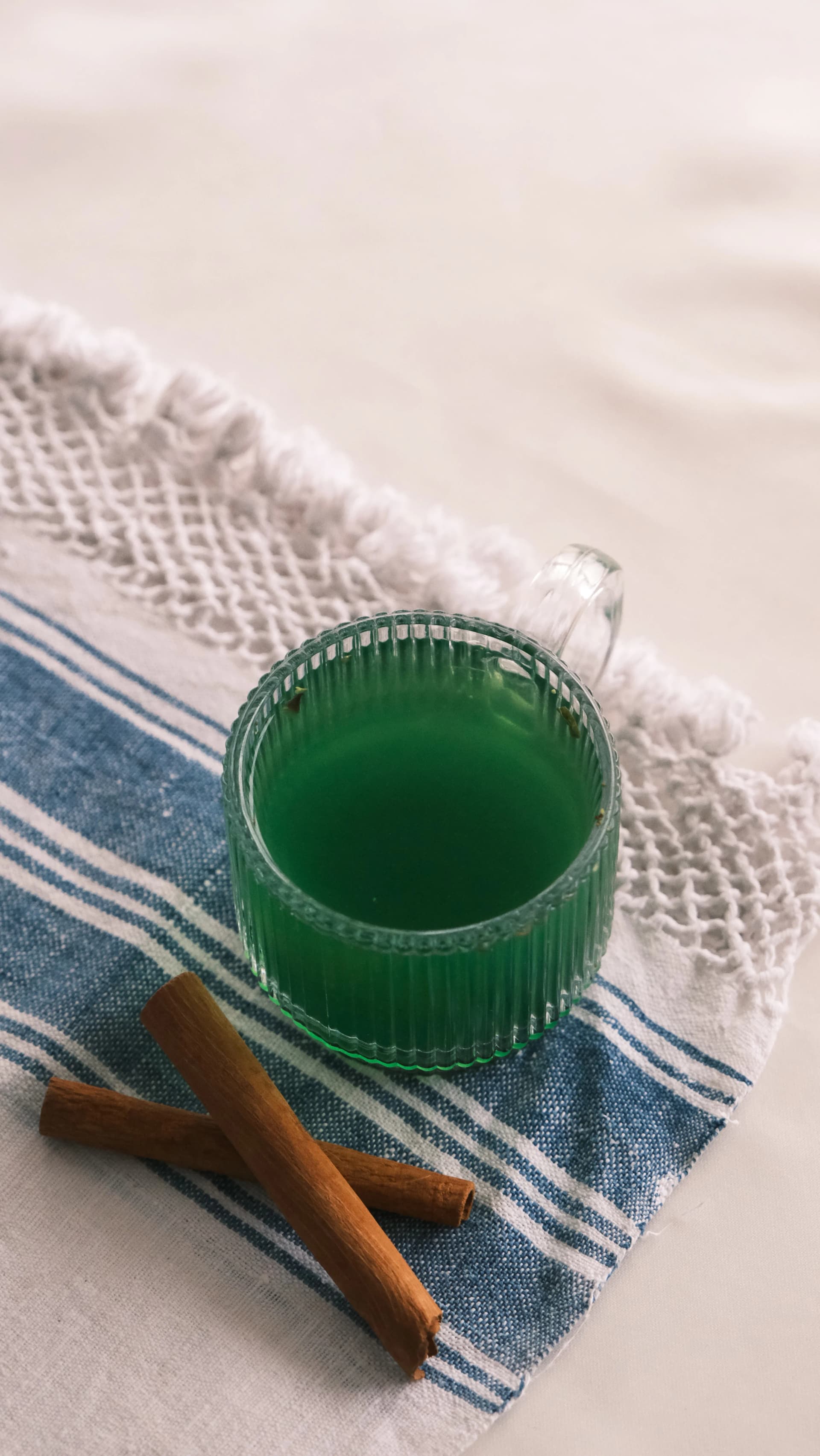
Kahwa Tea Recipe: A Kashmir-Inspired Green Tea
Cardamom, cinnamon and a few saffron strands give this green tea its character. Simmer the spices first, then steep the leaves briefly for a fragrant, balanced cup.
 🍵 Tea & DrinksComplete guide
Oct 10, 2026 · 6 min read
Healthy Drinks Besides Water: Tea, Kahwa and Smoothies
Some drinks are for thirst, some for a quiet tea break, and some are part of breakfast. Here is how to choose without buying into a miracle ingredient.
 🍵 Tea & Drinks
Oct 10, 2026 · 6 min read
Drinks for Inflammation: What the Evidence Actually Says
A cup of turmeric milk is food. A concentrated curcumin capsule is a different product. That distinction changes what you can reasonably expect from either.