
Build a low-carb smoothie you actually enjoy
Start with the ingredients and the flavour. Then check the numbers, understand their limits and decide how the blend fits your wider day.
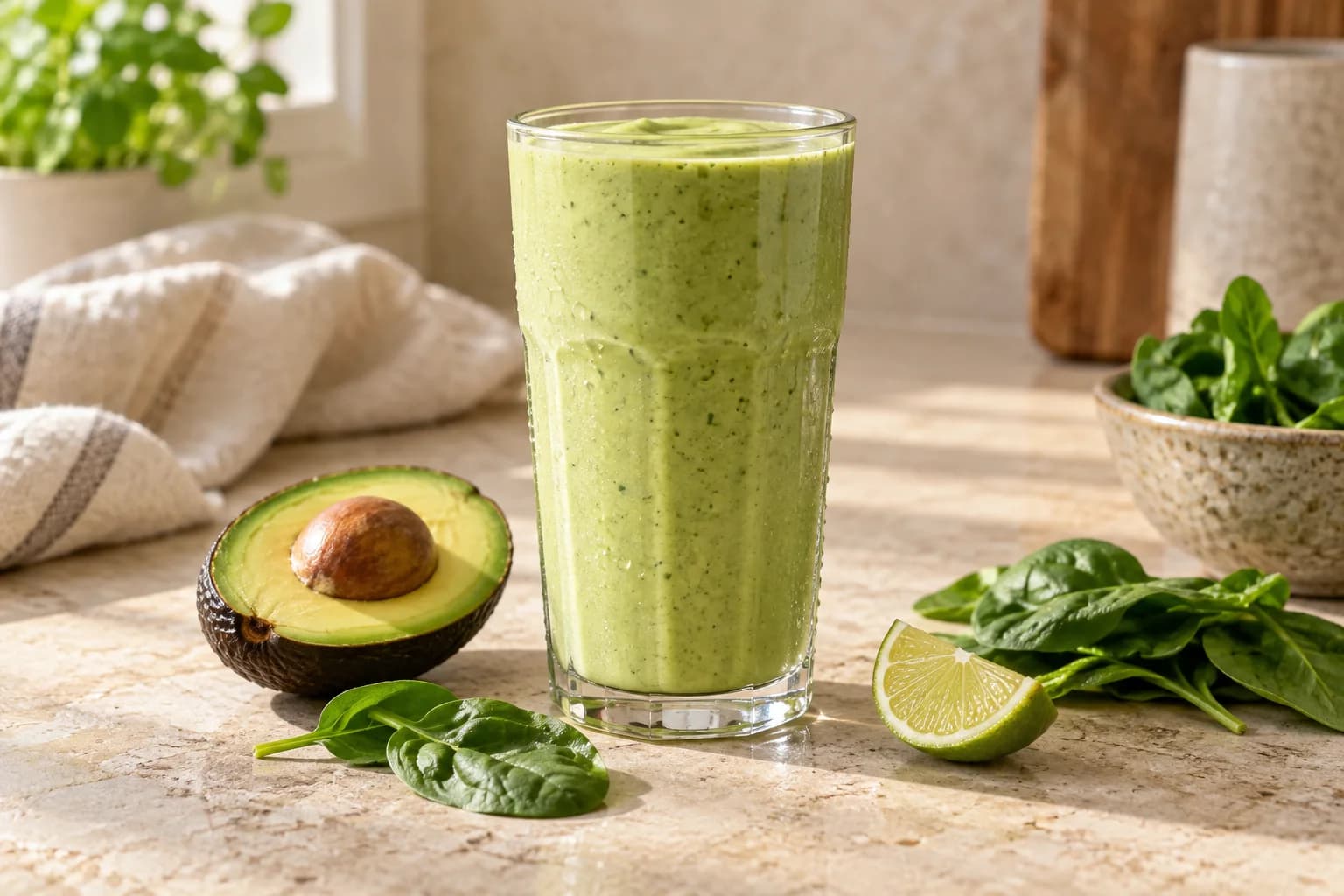
Quick answer: A low-carb smoothie can start with an unsweetened liquid, a measured creamy base such as avocado or plain yogurt, and a modest portion of berries or cocoa. Calculate the whole recipe, including milk, powder and toppings. The label ‘keto’ alone does not establish carbohydrate content or predict ketosis.
Key takeaways
- Read total carbs, fibre and serving size together.
- Our net-carb estimate uses US-style total carbohydrate minus fibre.
- On labels that already exclude fibre from carbohydrate, do not subtract it again.
- A smoothie breakfast rotation is not a complete keto diet plan.
What makes a smoothie lower in carbohydrate?
Usually, the useful changes are ordinary ones: choose an unsweetened liquid, measure the fruit and check flavoured powders or yogurts. There is no need to add a large spoonful of oil just to make a drink look more like a keto recipe. Texture can come from avocado, yogurt or silken tofu, and flavour can come from cocoa, cinnamon or vanilla.
Keto is a restrictive dietary pattern, and it is not necessary for everyone. The Harvard Nutrition Source review discusses the evidence and limitations. If you have diabetes, use glucose-lowering medication, are pregnant or are managing a medical condition, get individual clinical advice before adopting a ketogenic diet.
Total carbs and net carbs are different numbers
In the calculator’s US-style ingredient data, total carbohydrate includes fibre. The tool estimates net carbs by subtracting fibre and keeping the result at zero or above. It does not subtract sugar alcohols. Both total and net carbohydrate stay visible so you can see the calculation.
Food labels differ internationally. Australian and UK carbohydrate figures generally already exclude fibre, so subtracting fibre again can undercount. Use the convention for the label you are reading. If a clinician has told you to track total carbohydrate, do not substitute a net-carb target from a website.
| Total carbohydrate | Fibre | Estimated net carbs |
|---|---|---|
| 12 g | 5 g | 7 g |
| 8 g | 0 g | 8 g |
Four starting blends, with quantities you can inspect
The keto smoothie calculator includes these four recipes. Each starts as one serving, with every ingredient listed and quantities you can adjust. Nutrition is estimated from the site’s ingredient database, not measured in a lab. Check your products’ labels, especially for milk alternatives and protein powders.
Raspberry almond
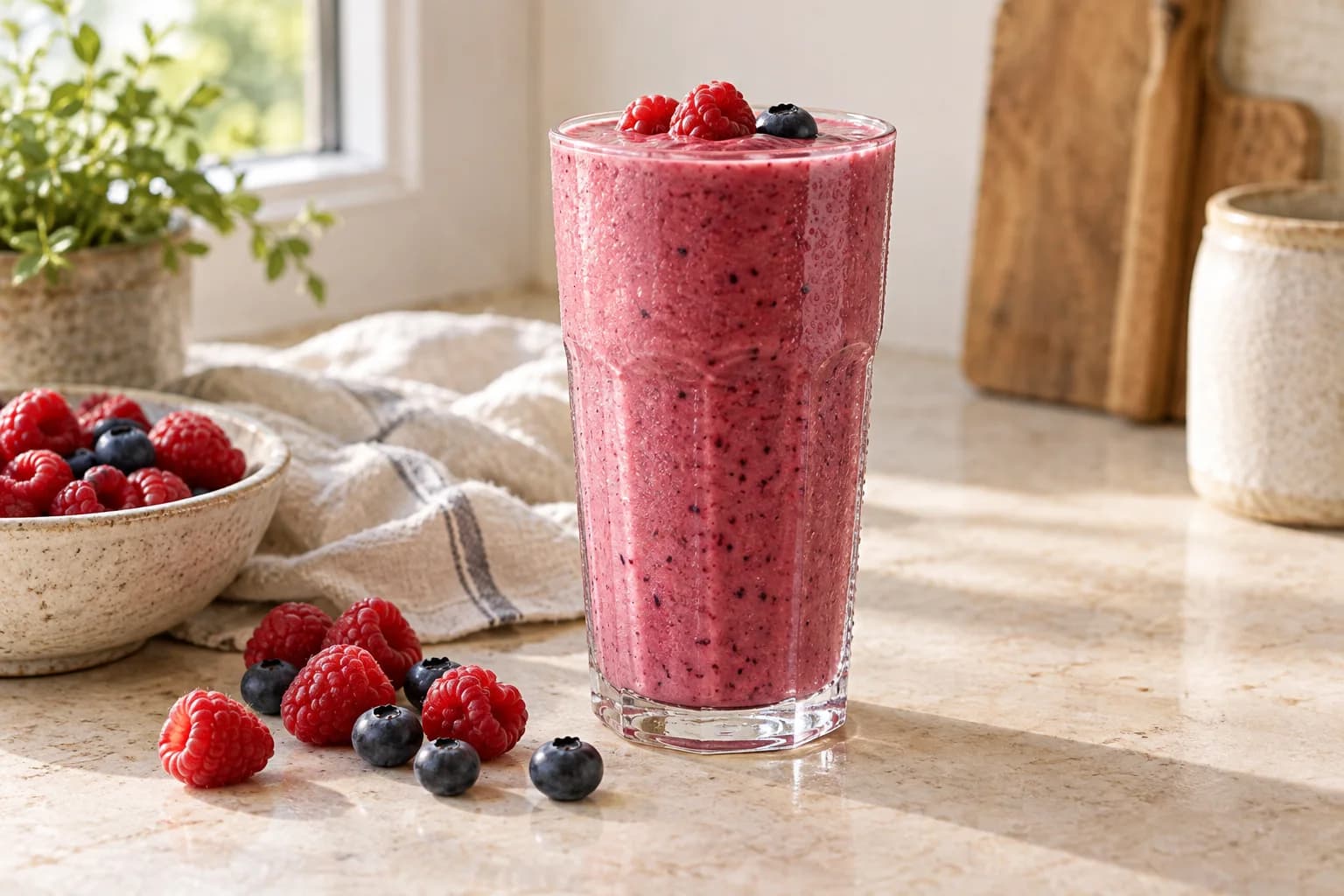
Start with half a cup of raspberries, one cup of unsweetened almond milk, 170 g full-fat plain Greek yogurt and half a tablespoon of chia. It is tart and creamy, with milk and almond allergens. Let the chia hydrate briefly if you prefer a smoother texture.
Avocado vanilla
Use 50 g avocado, one packed cup of spinach, half a cup of silken tofu, one cup of unsweetened almond milk and half a teaspoon of vanilla. This contains soy and almonds. Avocado supplies body; vanilla adds aroma rather than much sweetness.
Chocolate peanut
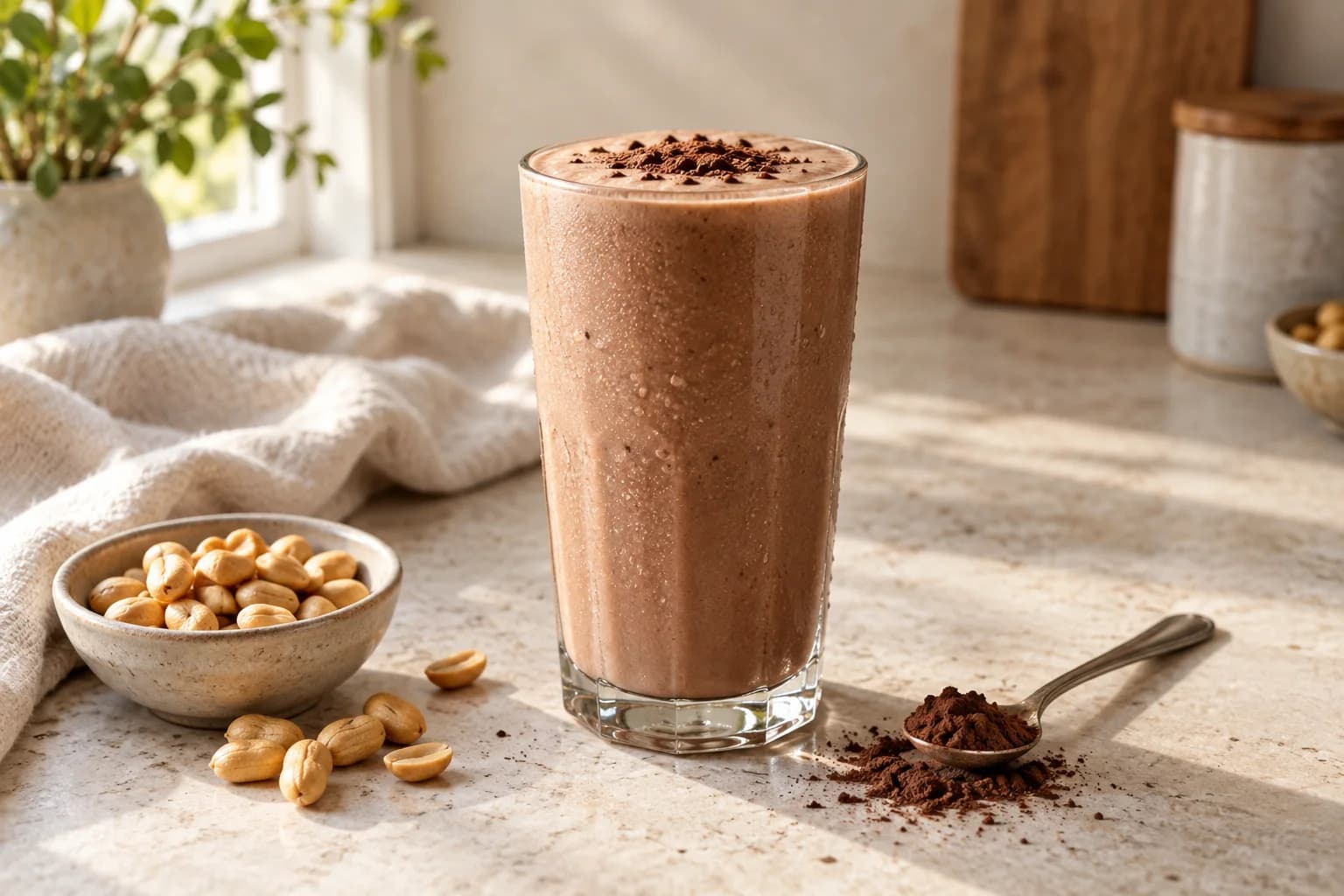
Use one tablespoon each of cocoa and peanut butter, one cup of unsweetened almond milk, one serving of plant protein powder and 25 g avocado. Check the powder’s label and add cold water if the blend becomes too thick. This contains peanuts and almonds; powders may contain other allergens.
Coffee cinnamon
Use half a cup each of chilled coffee and unsweetened almond milk, 170 g full-fat plain Greek yogurt, one tablespoon of hemp seeds and half a teaspoon of cinnamon. Choose decaf if that suits you. It contains dairy and almonds, with a tangier taste than a sweet coffee-shop shake.
Use a breakfast rotation without confusing it with a diet plan
Variety helps you discover what you enjoy, but seven different drinks are not required. Alternate a berry, green, cocoa and coffee blend, or repeat one you like. The calculator’s rotation lets you choose a starter recipe for each weekday and download the ingredient lists and methods.
The rotation uses the original starter recipes, while the calculator lets you experiment with a separate blend. Neither accounts for the rest of your meals or establishes your energy needs. These drinks may need other food alongside them. To organise a wider menu, use the existing meal planner’s diet settings, where low-carb and keto preferences are available.
Small changes are easier to evaluate
Change one ingredient, then compare the estimate and the taste. Replacing yogurt with coconut yogurt may alter protein substantially. Increasing nut butter changes the fat and energy as well as creaminess. Reducing berries can lower carbohydrate while making a drink less enjoyable; the useful amount is one that fits your needs and palate.
For a banana-free texture, see the banana replacement guide. If a powder makes the drink gritty, use the texture fixer before adding more ingredients. The goal is a breakfast you understand and enjoy, with numbers that describe it honestly.
Put it into practice
Carbs − fibre
= net carbs
US-style total-carb data · Estimated values
Keto Smoothie Calculator
Choose ingredients and portions to explore net carbs, calories and protein.
Build a low-carb blendMissing an ingredient?
Find your next-best match
Choose an ingredient · Set your preferences
Ingredient Swap Finder
Missing a banana, yogurt or milk? Find a practical replacement with a starting amount.
Find my ingredient swapSources & further reading
Sources support the guidance noted below. Recipe combinations and texture suggestions are editorial starting points.
- Harvard Nutrition Source: Ketogenic diet review
Diet context and limitations; not evidence that these recipes cause ketosis.
- FDA: Total carbohydrate on the Nutrition Facts label
US total-carbohydrate and fibre labelling.
Recipes to explore
 Protein17.8g protein
Raspberry almond Smoothie
Tart berries, creamy yogurt and a gentle almond finish. Contains milk and almonds. A measured starting recipe with approximately 10.3 g net carbs per serving using US-style ingredient estimates.
- Measured quantities you can adjust
- No banana needed for a creamy blend
Protein10.3g proteinAvocado vanilla Smoothie
A mellow, creamy green blend. Contains soy and almonds. A measured starting recipe with approximately 3.9 g net carbs per serving using US-style ingredient estimates.
- Measured quantities you can adjust
- No banana needed for a creamy blend
 Protein27.1g protein
Chocolate peanut Smoothie
Cocoa and peanut butter with a cool, creamy base. Contains peanuts and almonds; check powder labels. A measured starting recipe with approximately 7.5 g net carbs per serving using US-style ingredient estimates.
- Measured quantities you can adjust
- No banana needed for a creamy blend
Frequently asked questions
No. A green colour says little about carbohydrate content. Fruit, juice, milk and portion sizes determine the estimate.
Keep reading
🥭 BreakfastSep 29, 2026 · 4 min read
Smoothies Without Banana: Creamy Swaps and 4 Blends
Banana is useful, but it can take over every glass. Here’s how to get body and balance from other ingredients.
🥭 BreakfastSep 29, 2026 · 4 min read
Smoothies Without Yogurt: A Creamy, Flexible Guide
Use what is already in your kitchen, with simple swaps that account for taste, thickness and protein.
 💪 Protein
Sep 15, 2026 · 9 min read
12 Protein Smoothies Without Protein Powder (20 to 30g Each)
You do not need a tub of powder to hit 30g of protein in a glass. Greek yogurt, cottage cheese and milk get you there with better flavor and fewer additives. Here is the math and 12 recipes.